
Almost all of the historic palaces, Buddhist temples and monasteries in Korea are in excellent repair due to careful preservation or painstaking restoration. And it is no wonder – because they are stunningly beautiful!
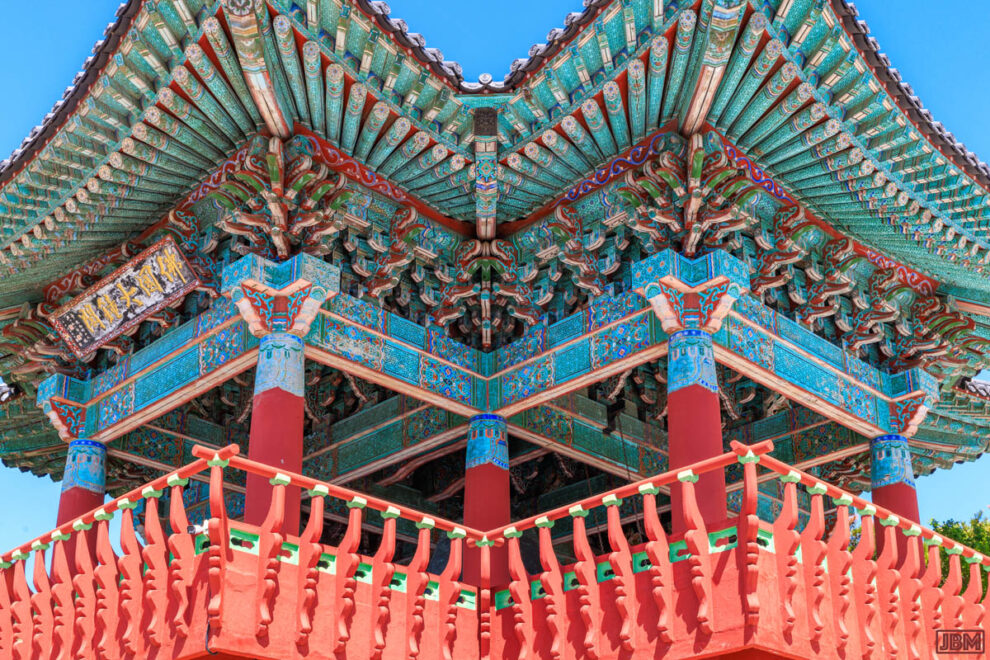
It turns out that the unique and striking styles have developed over nearly 2000 years, underlaid by highly developed design principles, Confucian and Buddhist philosophies.
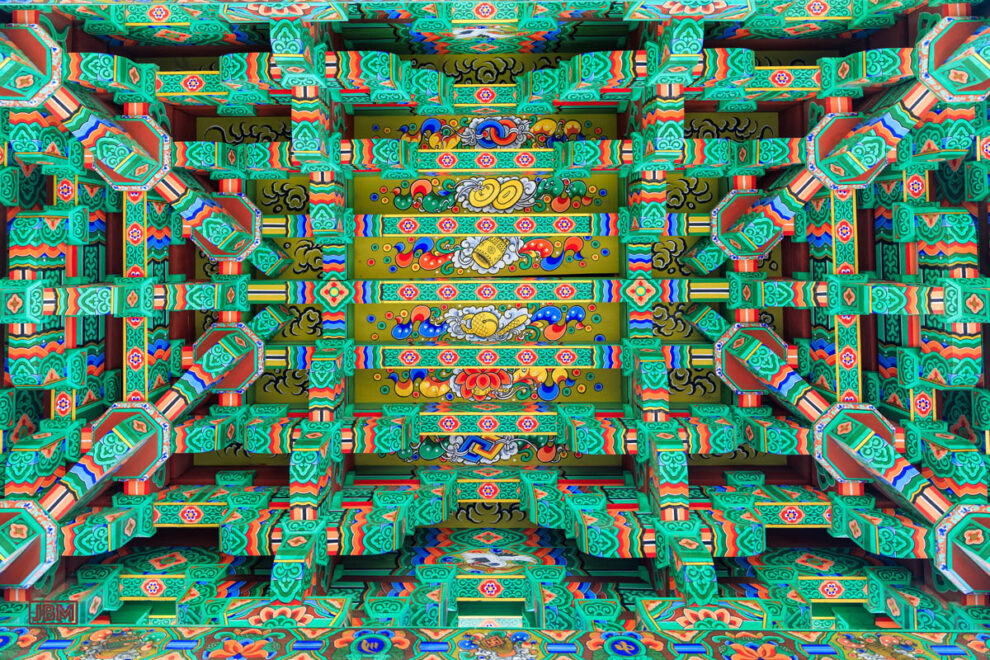
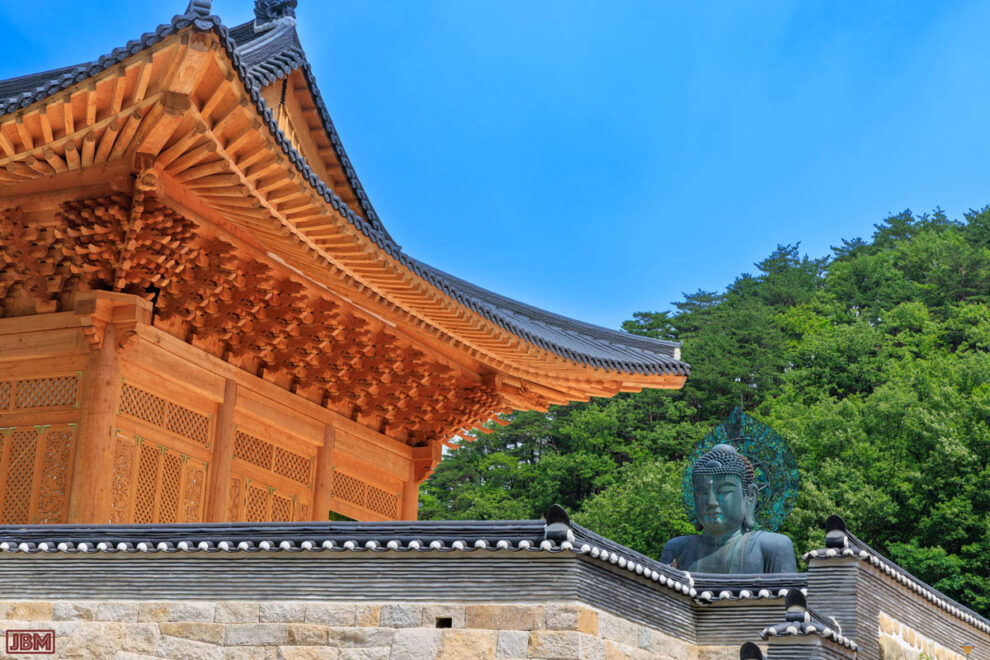
Over the centuries, a distinctive system of roof construction emerged, using a complex framework of interlocking wooden brackets. And no nails! This results in very stable (earthquake-resistant), durable, and long-lasting buildings – which are also elegant and quite beautiful.
What really sets them apart is the vibrant paintwork, colourful decorative flourishes known in Korea as dancheong (단청). In ancient China, danqing (丹青) referred to the mineral dyes used to make cinnabar and blue/green paint colours, and became a synonym for painting in general.
In Korea during the Three Kingdoms era, the five basic colours expanded into a palette of five basic colours – each of which had deep significance and meaning:
- Blue/green (East): Wood, Spring
- Red (South): Fire, Summer
- Yellow (Center): Earth — and in palace contexts, the Emperor/king
- White (West): Metal, Autumn
- Black (North): Water, Winter
During the Joseon Dynasty (1392-1910) the palette grew further through mixing of the five basic colours, and colours like aqua and orange became common.
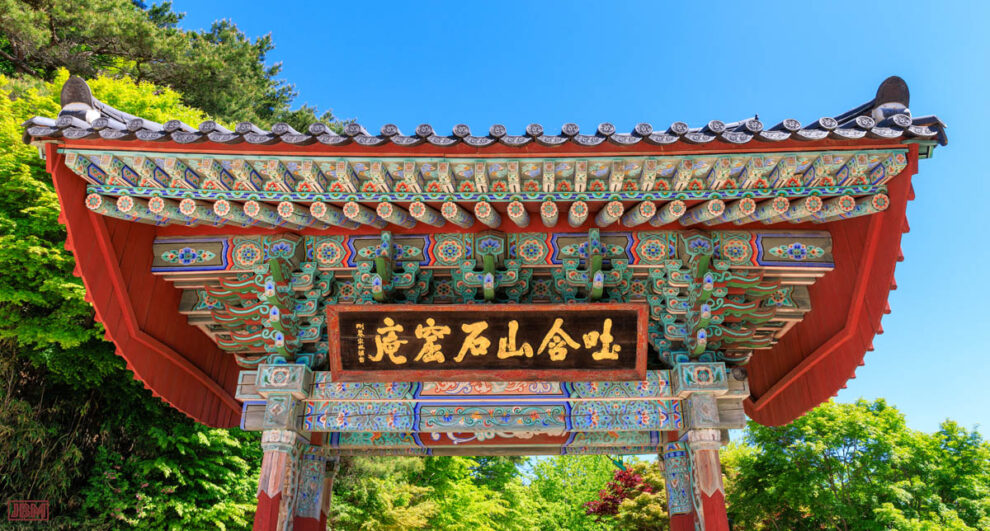
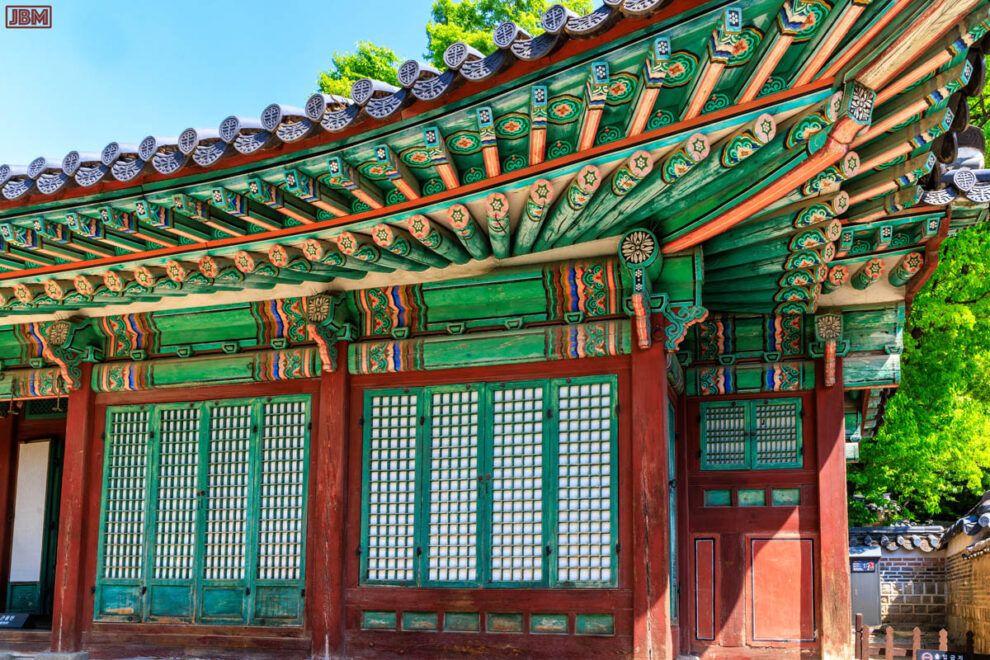
Since Joseon times, the most common practice is to commence by laying down a background layer of green paint to the eaves, with the other colours used to apply patterning over the top.
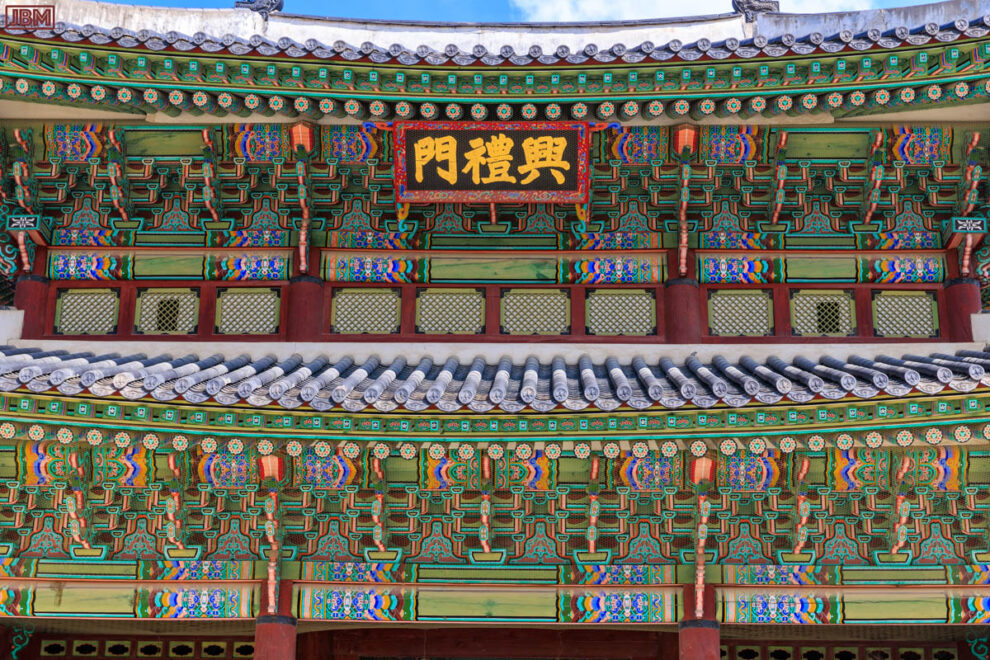
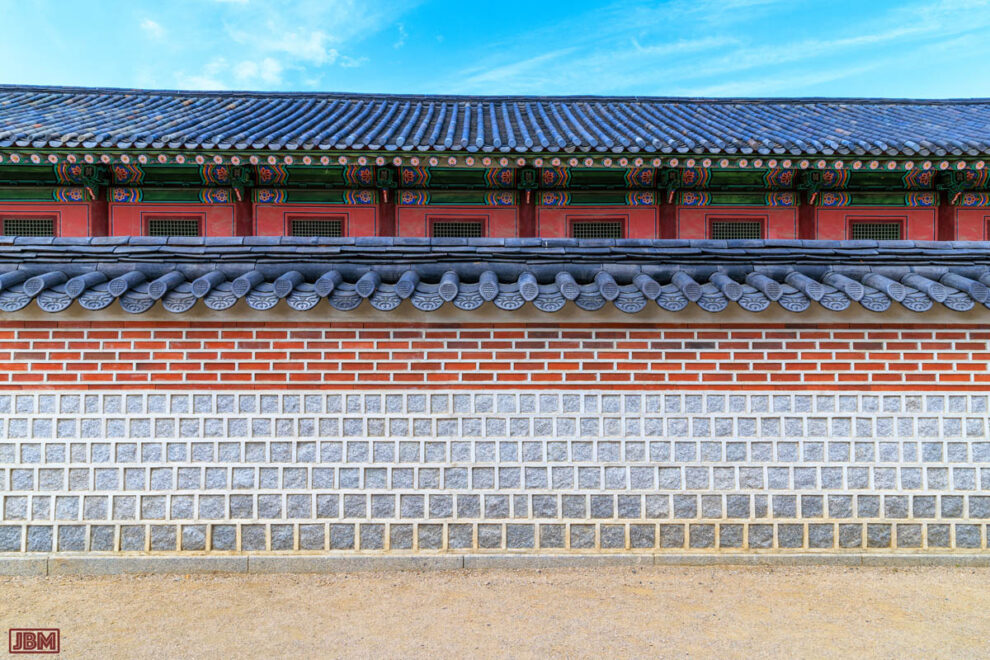
Red colour was commonly applied to the side walls of the building, with those walls often entirely made up out of removable door panels.
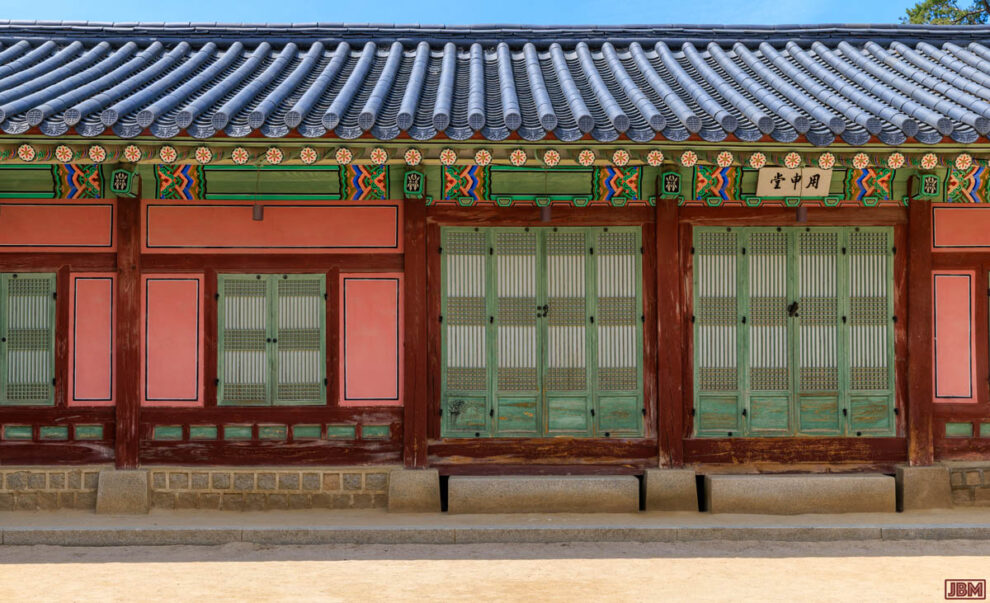
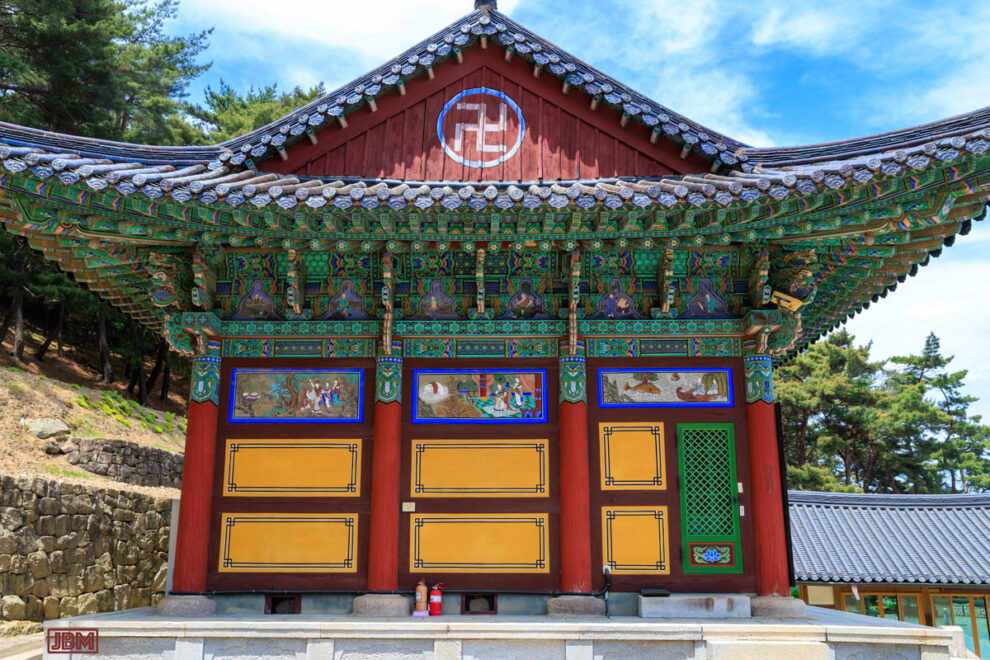
The style of dancheong varies according to the purpose and status of the building. Private homes (hanok) are likely to have little or no decorative paintwork, and royal palaces will have masses of intricate patterned paintwork. Temples are also often lushly decorated, and the decorations may include motifs and pictures of scenes from the sutras and stories from the life of Buddha.
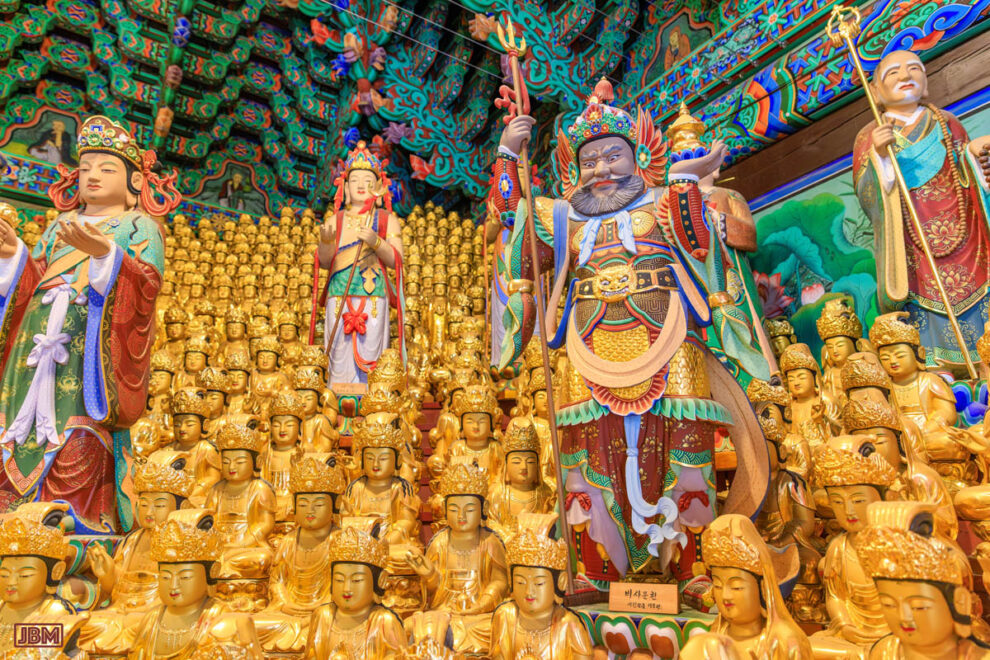
Detailed paintwork may also adorn the interiors of temples, serving as a rich backdrop to the statues and other objects on display within.
Dancheong work was only one component of overall building design, and is intended to perfectly integrate with tiled rooftops, walls, doors, windows, fences and other components of the building.
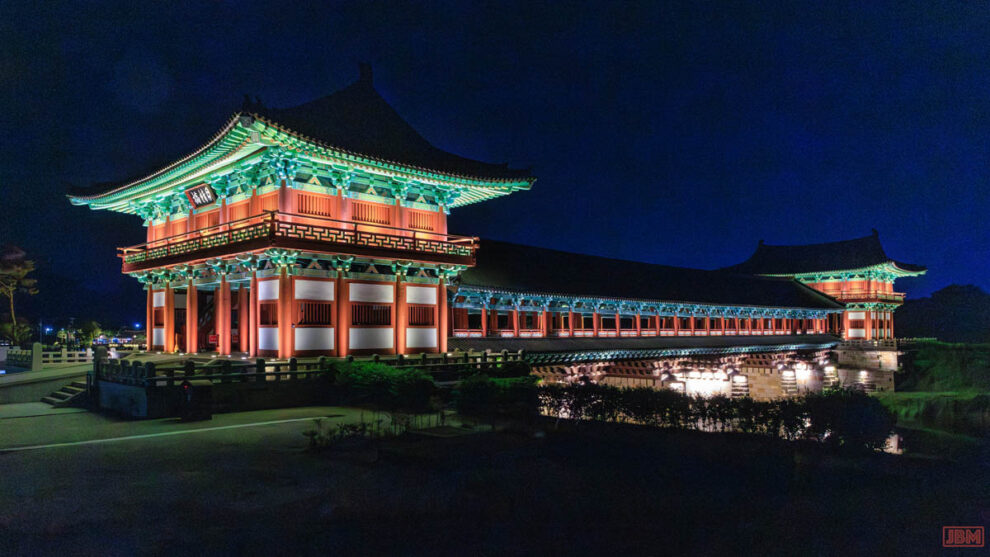
The Woljeonggyo bridge in Gyeongju displays some particularly fine dancheong work. But the bridge which currently stands on the site is actually a reconstruction of an earlier bridge dating from 760CE. It took several years of archaeological work and excavation during the 1980s to identify the location and design of the original, long-lost bridge. It looks equally impressive by night, when it is lit up really nicely.
The artisans who design and apply the dancheong decorative paintwork (known as dancheongjang) are both highly trained and highly respected, and are classed as ‘Living National Treasures’ by the national government.
The actual standards for dancheong are managed and maintained by the Korea Heritage Service. They also ensure that manufacturers adhere to minimum standards for the production of pigment paints used in dancheong.
