Starlings
Worldwide, there are MANY different kinds of starlings. 128 species at last count, all in the family Sturnidae, found mostly in Africa, Asia and Europe. All are medium-sized, and most species are characterised by their glossy iridescent plumage and by their highly social behaviour, including mass swarming events with hundreds (or even tens of thousands!) of birds forming huge ‘murmurations‘ in the sky.
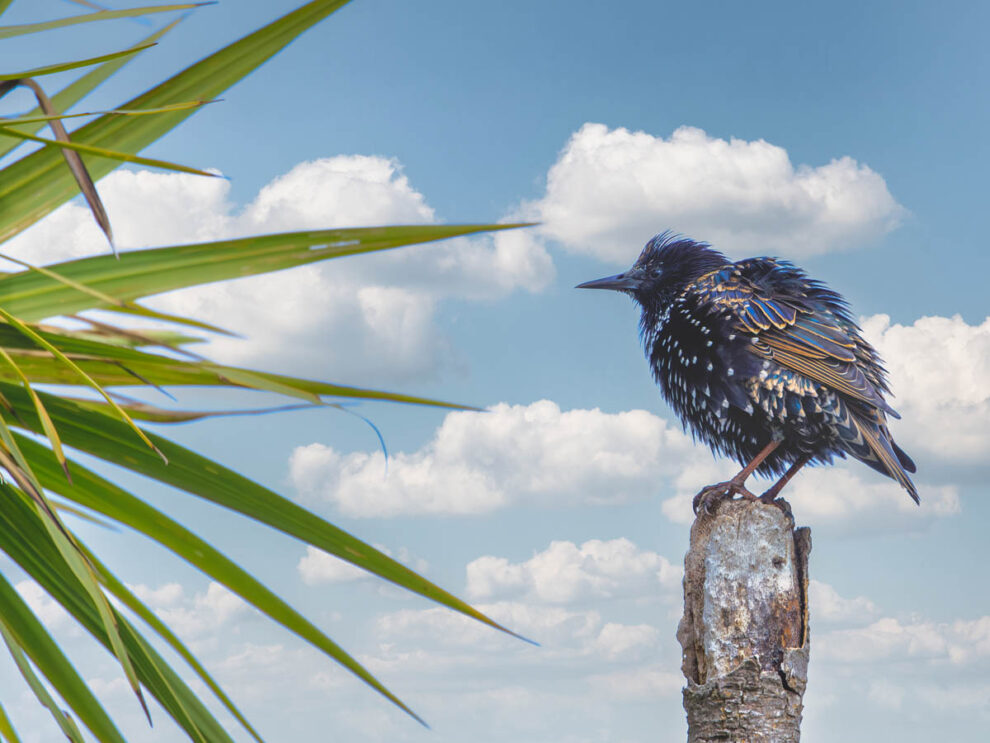
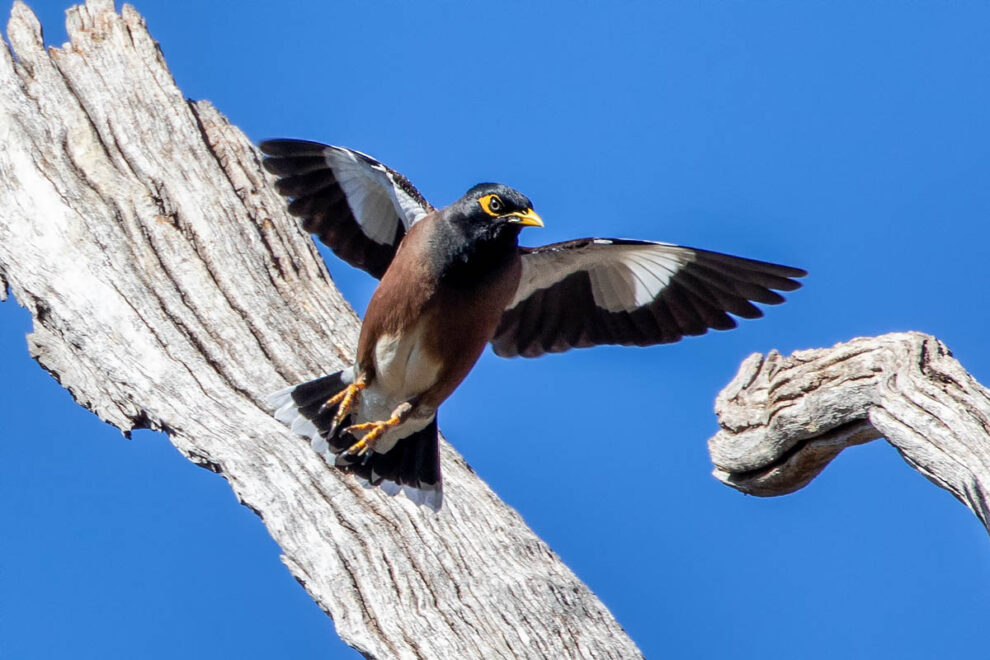
On the Australian mainland we can find three species – but neither the Common Starling nor the Common (or ‘Indian’) Myna are native, as were both introduced some time around the mid-1800’s. (Another species, the Tasman Starling, once found on Norfolk and Lord Howe Islands, went extinct in both locations some time around 1920). That leaves us with the Metallic (or ‘Shining’) Starling.
Metallic Starling
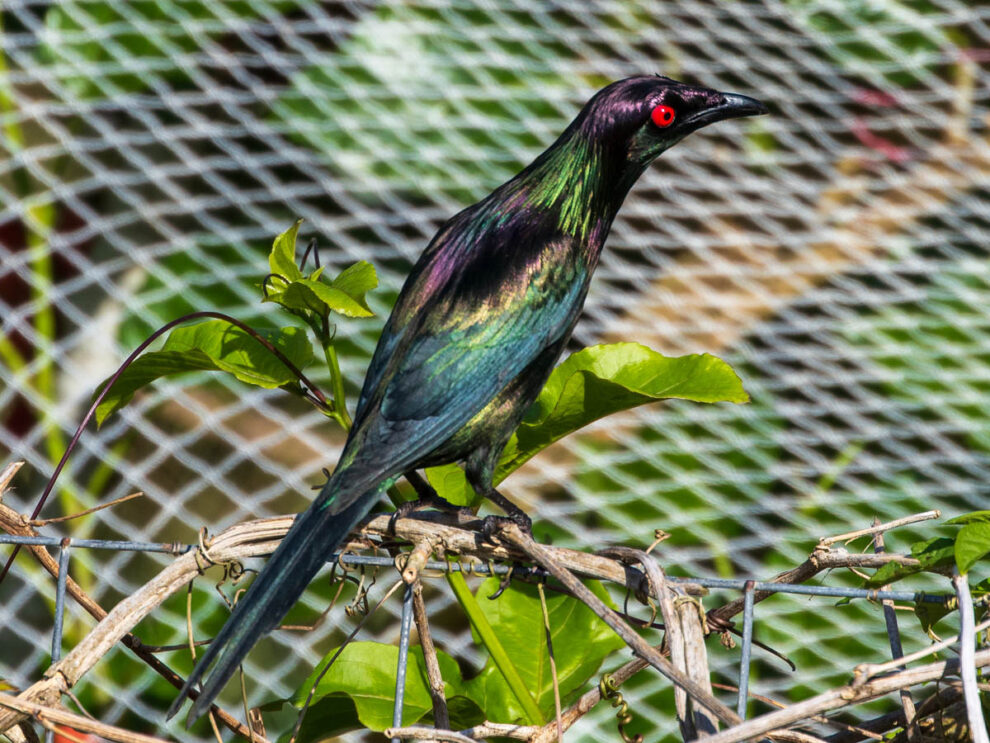
The Metallic Starling (Aplonis metallica) is a seasonal migrant to northeast Queensland, from Cape York south to around Mackay, with some large populations in some places. There have been occasional sightings of them outside this core regions, even down to northern NSW and the Northern Territory.
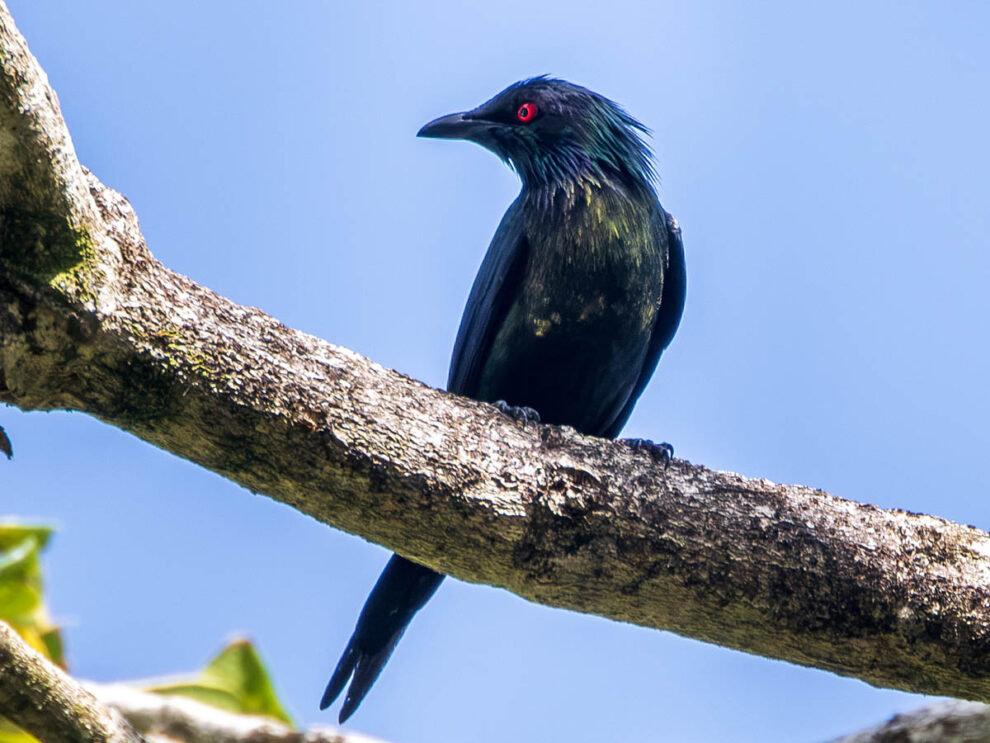
The adult bird measures about 24cm, with a long tapered tail. They can appear to be glossy black, but direct sunlight will make their feathers shine with bright iridescent greens and purples. Male and female birds look very similar.
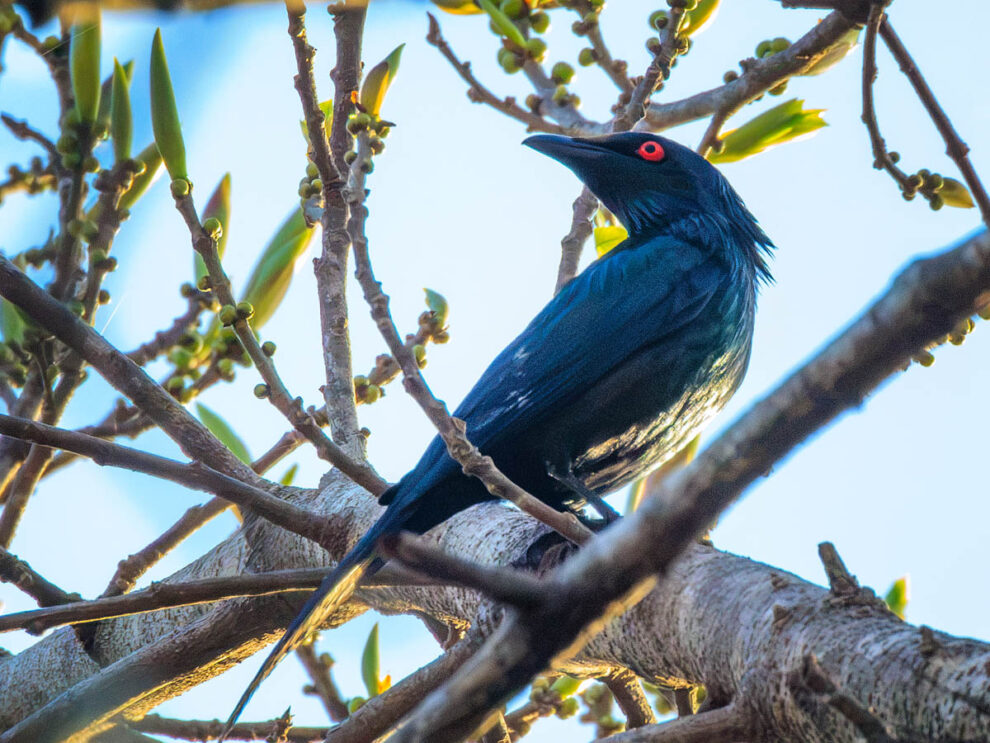
And those amazing crimson red eyes are very prominent! Apparently it’s an indicator of both age and health, with juvenile birds starting life with brown eyes.
There are two other species, both with wonderful names (the Trumpet Manucode and the Spangled Drongo), which also have shiny black plumage and red eyes, and are found in FNQ. But both tend to be solitary. The Spangled Drongo has a distinctive forked tail, and the Trumpet Manucode has a long rounded tail, shaggy plumage around the neck – and none of the ‘oil slick’ iridescent colours of the Metallic Starling.
Each year the starlings arrive on the Australian mainland in August and depart for New Guinea around March. They’re also found as far west as the Moluccas in Indonesia (though we don’t remember seeing them on Halmahera…) and as far east as the Solomon Islands.
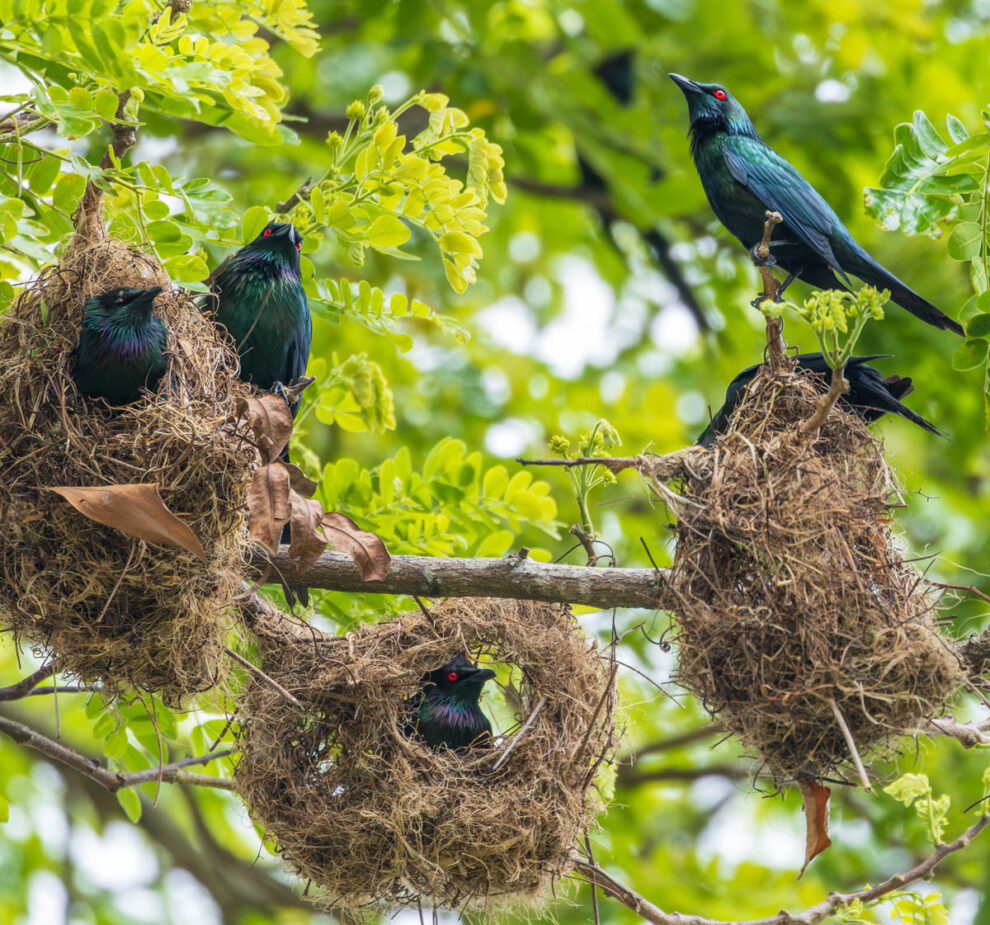
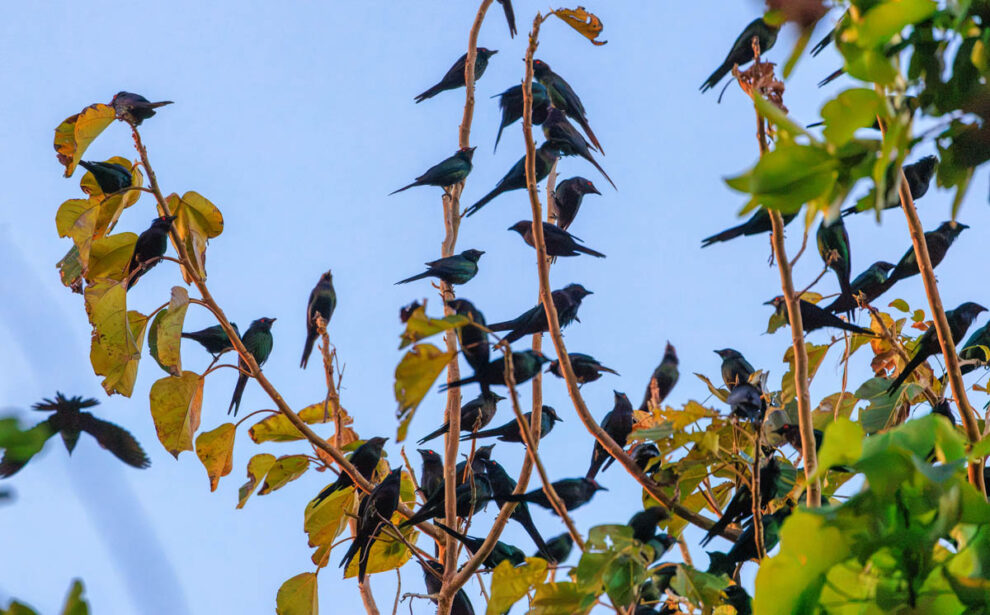
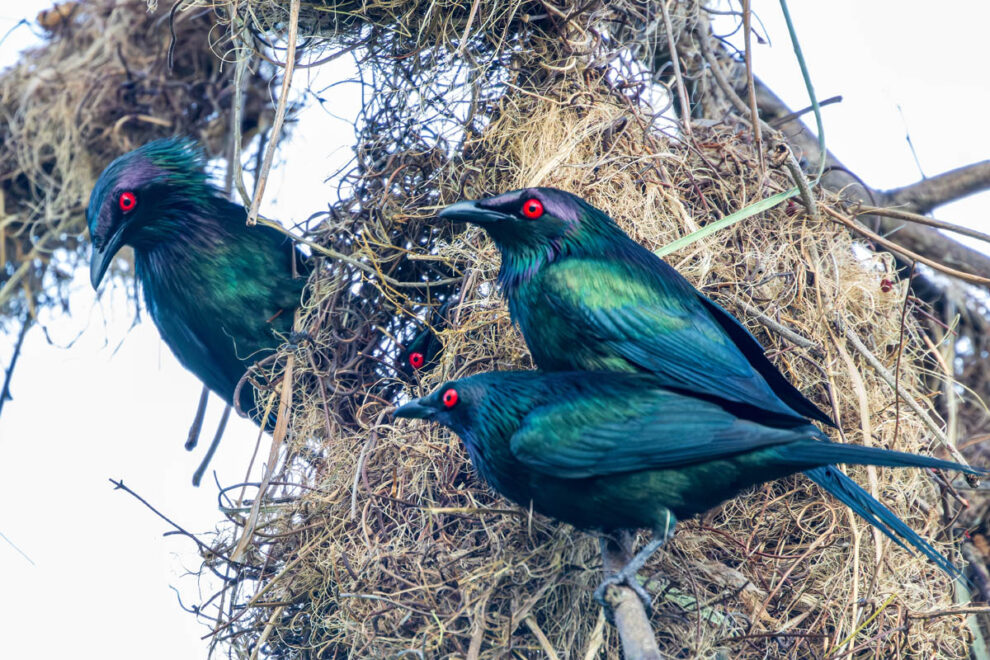
They are famously social birds, choosing to feed, flock and nest en masse. Their colonial nesting sites can house many hundreds of nesting birds in a single large tree.
The nests are suspended from highest branches of a large tree, with an entrance hole on one side. Although usually attached in multiple places, they will sometimes fall from the tree in strong winds. The nests are constructed from a mass of vine tendrils, and may be lined with strips of palm leaf.
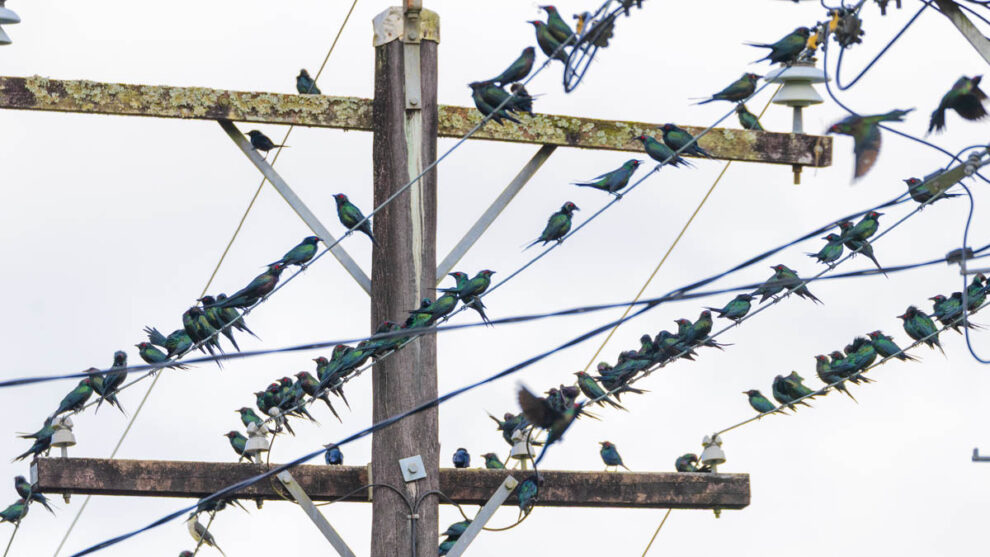
The nesting colonies are very busy, and very noisy, places, with continual movement of birds arriving, tending their nests and departing in large numbers. The ones pictured here residents of lthe arge fig trees in Banyan Park (home of ‘The Golden Gumboot‘) in central Tully, Queensland.
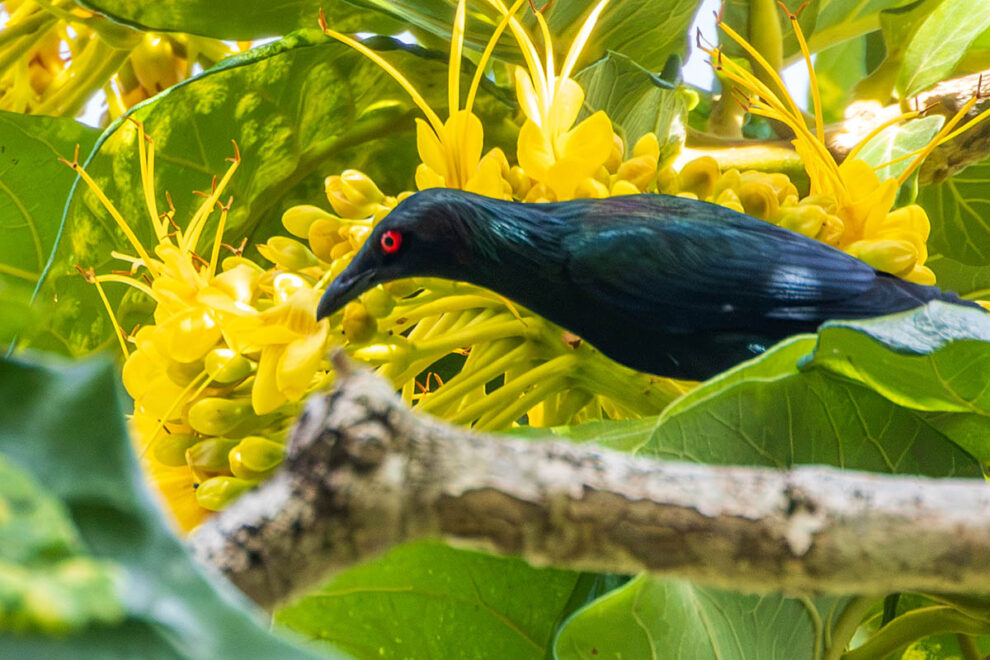
Metallic Starlings feed on insects and rainforest fruits. They also like to take nectar from flowering trees and shrubs.
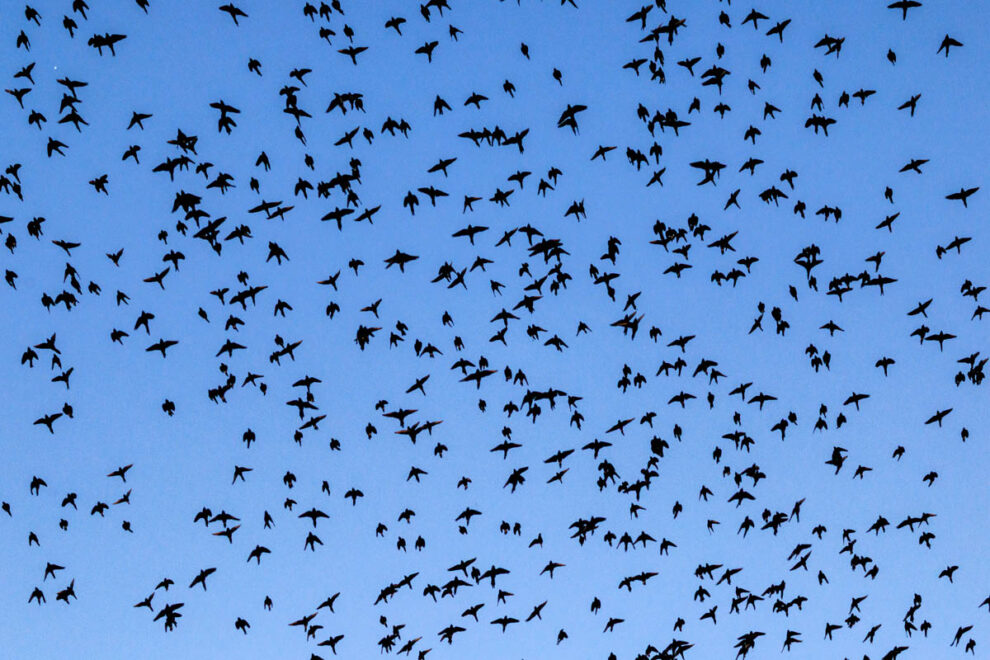
One of their most impressive and characteristic behaviours is their habit of gathering together and assembling to form huge flocks These flocks are called ‘murmurations’ because of the massed sound that the flock produces. The flock wheels around in the sky in near-perfect coordination, as if all controlled by one mind.
Murmurations usually occur at the end of the day – when we were camped at Chilli Beach in the Kutini-Payamu (Iron Range) National Park, they would arrive every day at exactly ten minutes before sunset.
This behaviour presumably allows for social interaction between the birds, but also serves as protection from predators as the birds move to their night-time roosting locations.